
Blog | SEO for Small Businesses | April 2025 | by Dee Bowling
Are you new to Search Engine Optimization (SEO) or struggling to get organic traffic to your website? Don’t worry! I’m sharing 11 great SEO tips to help you get noticed by potential customers and the Google algorithm.
You don’t need to be a tech whizz to follow this guide, either. What’s more, the SEO tools mentioned along the way are free to use.
First, though, let’s talk about what SEO is and why it’s a crucial part of your digital marketing strategy.
SEO is all about improving your website’s visibility and rank in search engine results. These days, the internet is flooded with businesses trying to stand out amidst thousands of competitors, and SEO is the bridge that cuts through all the noise and drives traffic straight to your virtual door.
By optimizing your keywords, meta data, content, site performance, and the user experience with SEO, you’re more likely to:
- Rank higher on search engine results pages (SERPS)
- Position yourself in front of the right audience
- Stand out from your competition
Ready to grow your business? Here are 11 easy SEO tips you can start using today:
- Optimize Your Website for Local Search: Did you know that 46% of Google searches are from people looking for local businesses? Think about the last time you searched for a company. You looked up the location on Google Maps or used a ‘near me’ search, right?
Optimizing your business for local search by including local keywords in your Google Business Profile (GBP) does wonders for getting your business in front of the right people, attracting qualified leads, and boosting your rank on search engines. What’s more, it won’t cost a thing to create your profile – it’s a free Google service.
If you haven’t got a Google Business profile, here’s an excellent guide from digital marketing expert, Neil Patel explaining how to create one and supercharge it with SEO. - Spend Time on Keyword Research: With the right keywords, you can attract a highly targeted audience actively seeking what you have to offer. First, you’ll need to identify and target the keywords and phrases potential customers use during their search queries.
Once you understand what people are searching for, you can align your web content (by including the right keywords) to respond to those queries. The Google algorithm picks up on this and positions you as a business with solutions to searchers’ specific needs or pain points because Google likes to show relevant search results. In turn, this boosts organic traffic, enhances the user experience, and improves your online visibility.
So, how do you figure out what your customers are searching for?
Well, tools like Google Keyword Planner, AnswerThePublic, and Allintitle.co are great. These tools are free, but some have subscriptions that give you more functionality. If you want to read up on keyword research, HubSpot know their stuff, but here’s a quick visual summary from their guide:
- Enhance the User Experience: SEO is not just about optimizing for search engine algorithms. It’s an absolute powerhouse you can use to connect with your audience. By optimizing your website’s structure, design, and content, you can deliver a seamless user experience that keeps your visitors engaged and craving for more.
In 2025, this is especially true as Google measures audience engagement as a measure of your website’s quality, which, again, affects your overall rank in the SERPS. Here’s a breakdown of the top six ranking factors from SEOwriter.marketing: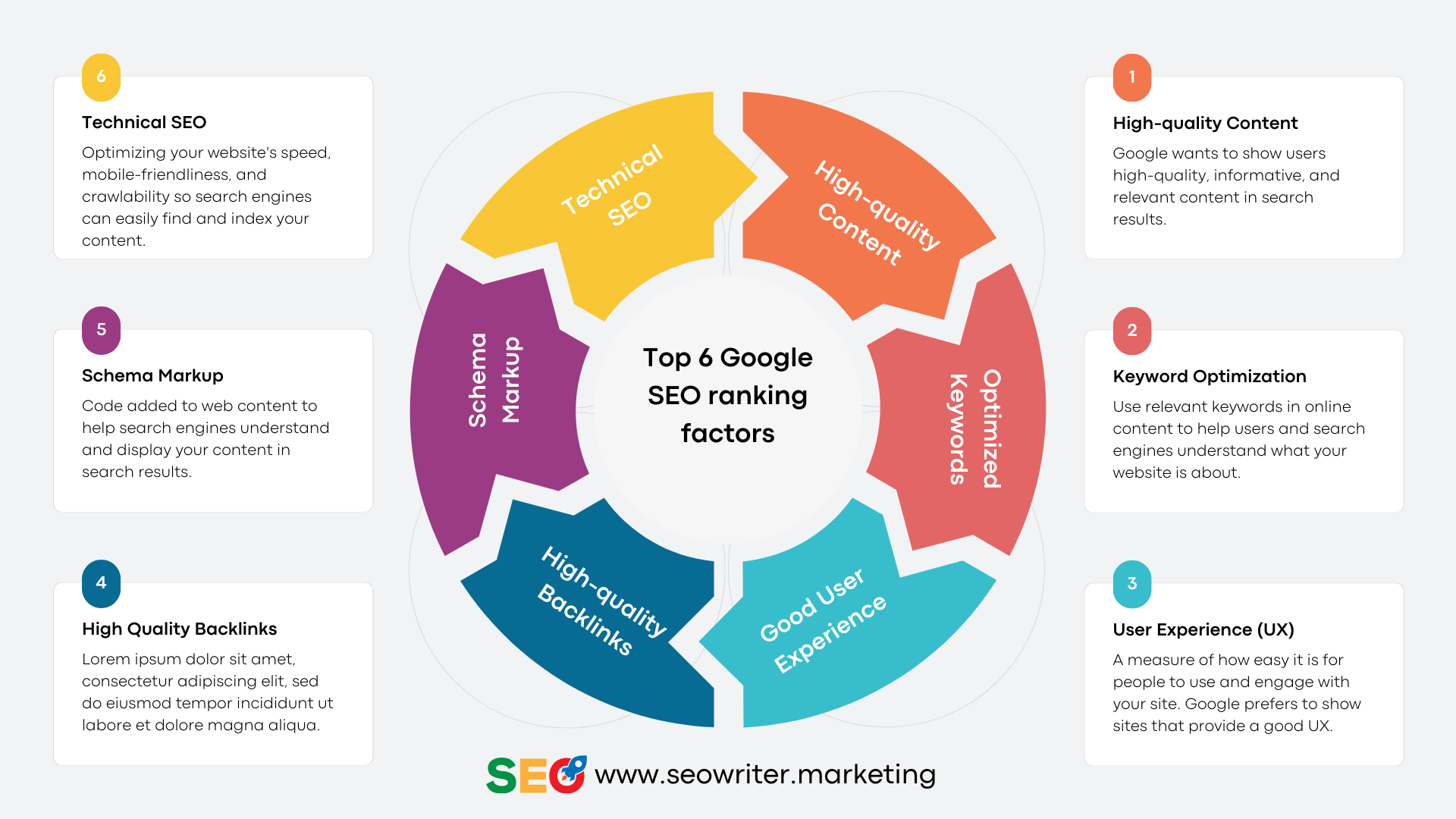
To improve the user experience, consider the following pointers:
Keep your page load speed around two seconds. We all want fast results when accessing web content.
Ensure your site is mobile-friendly. Why? Because 94% of your audience use smartphones so your content must be accessible and readable on smaller screens. Consider the site layout, page speed, font, and navigation. Here’s a free tool to test the mobile version of your website.
Provide visitors with regular, valuable, and relevant content to improve engagement and satisfaction.
Optimize your URLs and meta tags with schema markup to make your website easier for people and search engines to understand and navigate.
Organize your site structure and internal linking. A well-structured website with clear categories and pages helps users locate what they need quickly. Internal links provide users with seamless navigation between pages. They also help search engines understand the relationships between different pages and the website’s overall structure, improving content visibility in search results. - Build Community, Credibility, and Trust: By optimizing your content and securing valuable backlinks with SEO, you’ll solidify your reputation as an industry leader. When users see your website consistently appearing at the forefront, they’ll view you as a go-to authority in your field. This comes with time and effort, but with increased credibility, you build trust with customers and will improve your position in the SERPS.
- Learn What Your Competitors Are Getting Right (And Wrong): With over a billion websites on the internet, competition can be fierce, so understanding what your competitors are doing online is essential for business success.
SEO provides a wealth of information about your competitor’s digital marketing strategies. You can use it to evaluate their keyword analysis, backlink profiles, content strategy, on-page optimization, and social media presence which can help to optimize your own digital presence.
How do you access this information? The Ubersuggest competitor analysis tool is a great place to start. It’s also free with limited use.
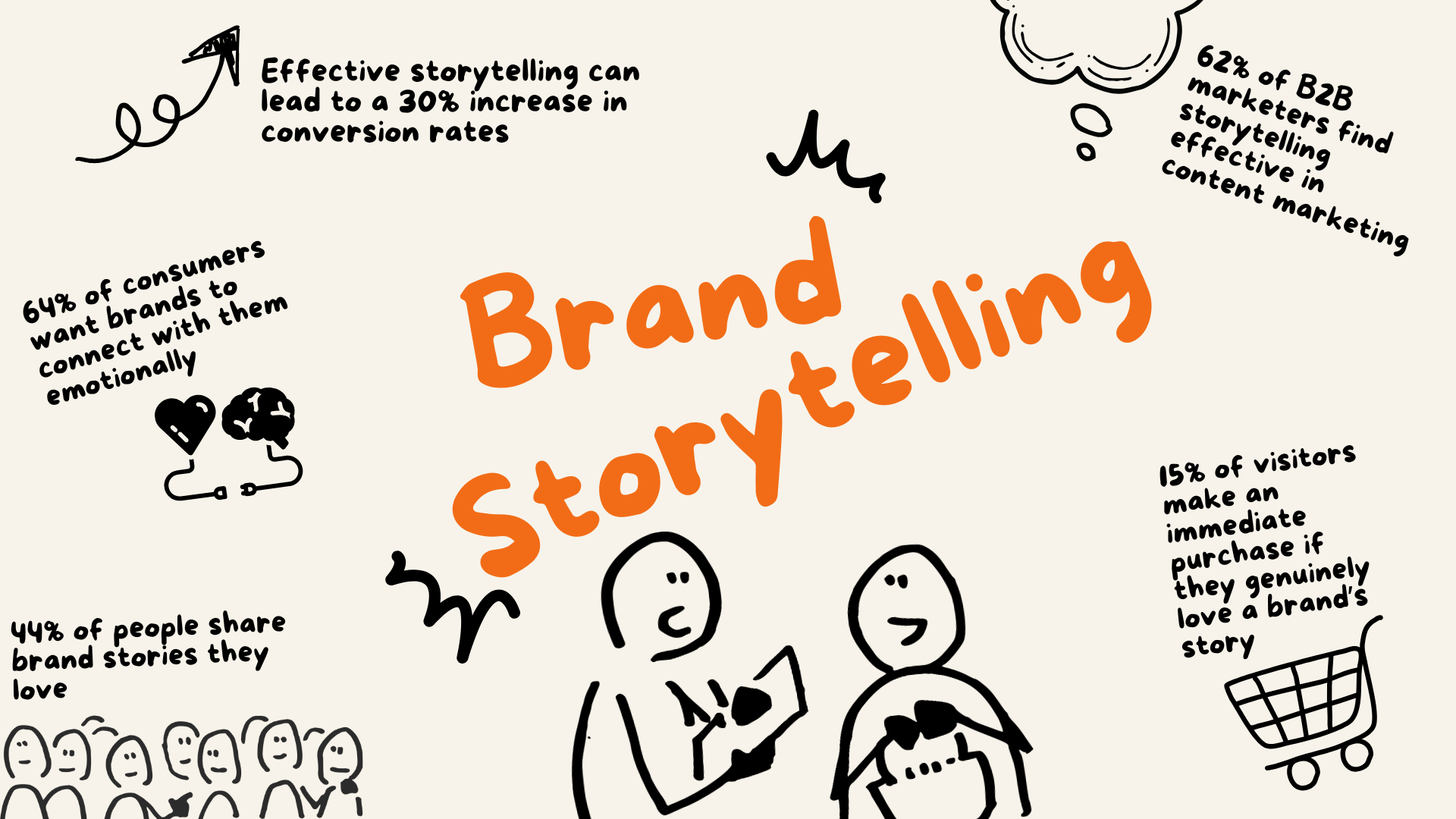
- Engage With People by Connecting With Your Story: Storytelling is a powerful tool for conveying your brand message, values, and benefits in a way that resonates with your target audience. It’s not just about telling a story; it’s about engaging with your audience and connecting with them on a deeper level. By incorporating storytelling techniques into your content, you can make it more compelling, relatable, and memorable, enhancing user experience and engagement.
- Ask For Feedback and Reviews: Think about the last time you made a significant purchase. You checked out what other people thought of the company or their purchase, right? Customer reviews are crucial in building trust and credibility for your business.
By actively seeking feedback and reviews, you demonstrate your value for customer input and engagement with your audience. This proactive approach fosters a positive brand reputation and increases the likelihood of attracting new business.
We know user engagement is a ranking factor for search engines, so responding to reviews improves the user experience, which can boost your rank in the SERPs. Keep in mind, while positive reviews are no doubt influential, addressing negative feedback is also vital for building customer trust and capturing organic search traffic.
If you’d like to learn more about how to generate customer reviews, check out this fantastic guide from Hubspot. - Learn About Metrics: SEO provides valuable data and analytics offering deep insights into how customers search, engage, and interact with online content. By harnessing this information, you can tailor your marketing strategies, content creation, and user experiences to align with customer preferences.
SEO metrics also enable you to identify trends, patterns, and customer intent, allowing you to make data-driven decisions that optimize your online presence and increase conversion rates. Here are some key SEO metrics to track: By leveraging SEO insights, you’ll stay ahead of the curve, better understand your target audience, and create meaningful connections that drive business growth.
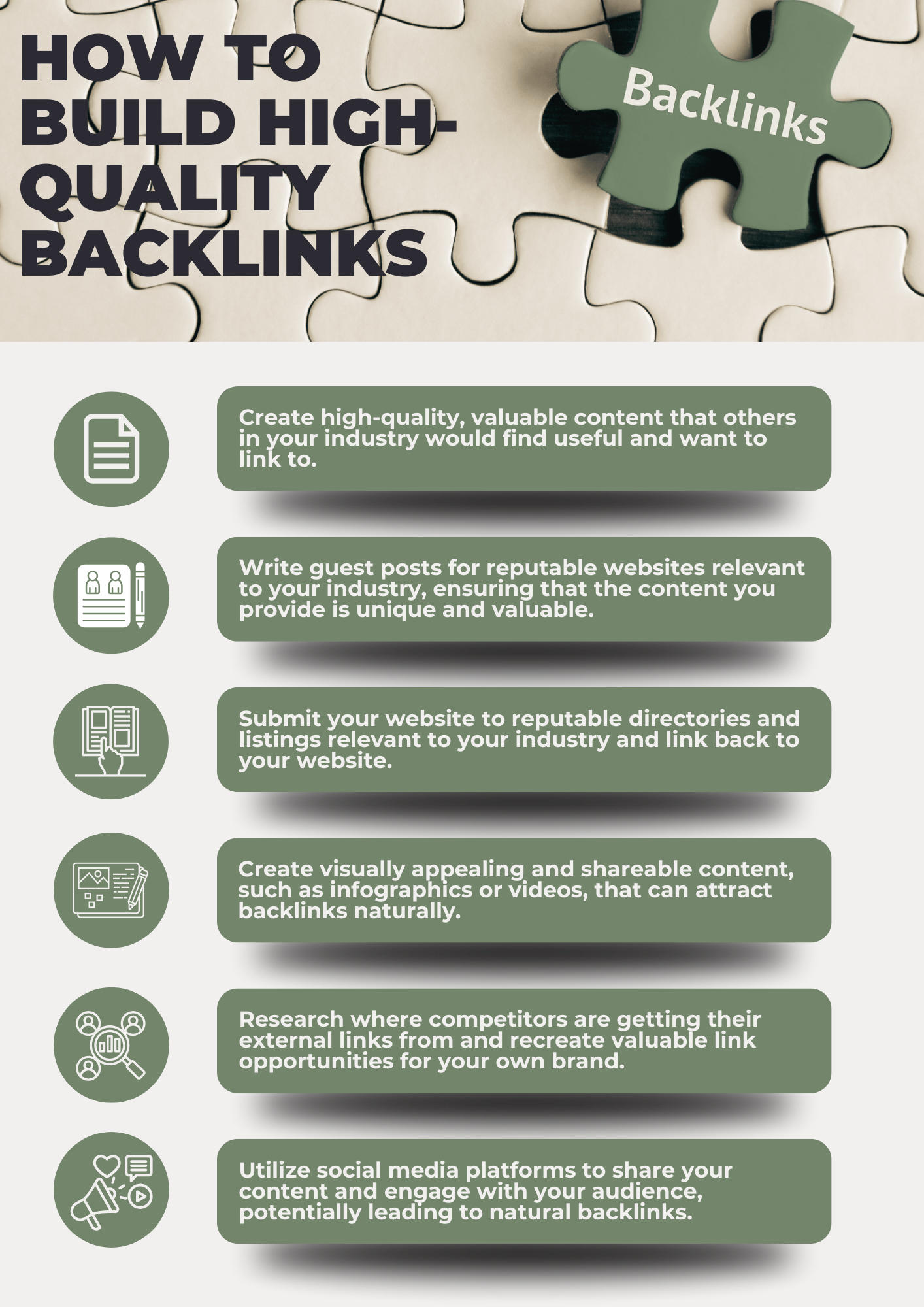
There are a ton of tools out there to help you track your SEO efforts. Here’s a hand-picked guide to some of the best from digital marketing expert Neil Patel. - Include High-Quality Backlinks: High-quality links are vital in SEO because they contribute to a website’s overall authority and credibility. Search engines, like Google, consider the quality and quantity of links pointing to a site as a ranking factor. Backlinko do a great job of explaining the nuts and bolts of building high quality backlinks, but I’ve summarised the broadstrokes from their in-depth guide in the visual below:
- Share Your Brand Values: In a world where consumers are increasingly conscious of the brands they support, sharing your brand values in your SEO efforts can help differentiate your business and foster a loyal customer base.
Clearly communicating your brand values attracts like-minded individuals who resonate with your mission and purpose. This leads to higher engagement and increases the likelihood of earning quality backlinks and social media mentions (critical factors in improving your search engine rankings). In the table below, I’ve outlined 5 highly successful examples of brand values that resonate strongly with consumers based on current research.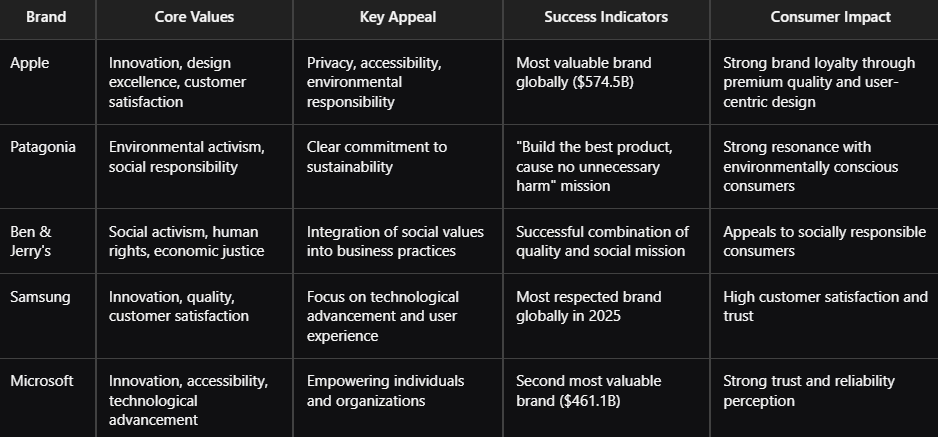
- Monitor Your Progress: Unlike other marketing strategies that provide short-term results, SEO can deliver long-term benefits for your business. Once your website is optimized and ranks well, it can continue attracting organic traffic and generating leads for months or even years. Also, your efforts can be tracked and measured using various tools, allowing you to monitor the impact and ROI of your SEO strategies.
So there you have it. I hope you found this guide helpful and gained insight into how SEO can help to improve your visibility and reach. Thanks for reading.
Do you have any SEO tips to share? Let me know below!
 seowriter.marketing
Leave a comment